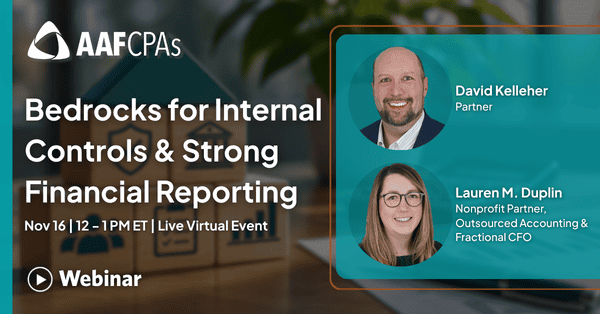
Section 404(a) of the Sarbanes-Oxley Act requires public companies to maintain effective internal controls over financial reporting. Compliance ensures that financial statements are accurate, timely, and reliable, supporting governance and operational stability. For small and mid-sized public companies, a structured approach to internal controls helps prevent errors, detect vulnerabilities, and maintain stakeholder confidence. Understanding where controls are most critical allows organizations to strengthen financial integrity and reduce risk across reporting processes.
Building Stronger Financial Reporting Controls
Transparent reporting provides stakeholders with confidence in a company’s financial statements. Accurate and consistent reporting signals strong governance and reduces the likelihood of errors or misstatements. Companies with weak internal controls often experience increased audit costs, stock volatility, or challenges in securing capital, underscoring the importance of regular oversight.
Internal controls also help prevent financial fraud by embedding checks throughout reporting processes. Ongoing monitoring and process assessments allow organizations to identify irregularities early, ensuring that transactions are recorded correctly and regulatory requirements are met. Embedding these practices into routine operations supports long-term stability and builds trust with investors and stakeholders.
Implementing an Effective SOX 404(a) Internal Control Framework
SOX 404(a) compliance is most effective when approached as a structured program rather than a one-time task. Organizations benefit from documenting processes, identifying critical control points, and conducting regular testing to uncover deficiencies before they become material weaknesses. Collaboration with auditors and internal teams maintains alignment with operational needs and evolving regulatory standards.
Benefits of a Strong SOX 404(a) Internal Control Program
- Identifies and addresses gaps proactively, reducing the risk of errors or misstatements
- Strengthens operational consistency and oversight across departments
- Reduces exposure to regulatory or financial penalties
- Provides stakeholders with reliable financial information
Integrating these practices into daily operations ensures internal controls become both a compliance requirement and a tool for maintaining financial integrity, managing risk, and supporting long-term growth and resilience.
Putting This Into Practice: SOX 404(a) Compliance
AAFCPAs guides public and pre-IPO companies through the complexities of SOX 404(a) compliance by designing internal control frameworks that are practical, scalable, and aligned with operational needs. We work closely with management and external auditors to assess existing processes, document critical financial reporting procedures, identify gaps, and implement controls that strengthen governance while improving efficiency. Our approach integrates control testing, walkthroughs, remediation, and ongoing monitoring to ensure that controls operate effectively, reduce risk, and maintain readiness year over year. By co-sourcing the internal audit function when needed, we provide independence, technical depth, and flexibility, allowing organizations to navigate the specialized requirements of IT, cybersecurity, and financial reporting while supporting continuous improvement. For pre-IPO companies, we focus on establishing SOX readiness early, creating a foundation that enables a seamless transition to public company reporting and positions management for reliable, audit-ready financial statements that support long-term growth.
These insights were contributed by Lisa Whittemore, CFE, CRMA, MBA, Partner, Risk Advisory.
Questions? Reach out to our author directly or your AAFCPAs partner. AAFCPAs offers a wealth of resources on risk advisory. Subscribe to get alerts and insights in your inbox.