


Accounting firms, state CPA societies and national accounting organizations are addressing the wave of international outrage and demonstrations sparked by the killing of George Floyd, an unarmed African-American, by four Minneapolis police officers.
 The Boston chapter of Financial Executives International (FEI-Boston) is presenting a Social Media Workshop Webinar for CFOs in Transition on Tuesday, June 9th, 2020 led by AAFCPAs Partner & Chief Marketing Officer Matthew Boyle, MBA.
Matthew will incorporate his keen knowledge of CFO behavior and understanding of the Boston marketplace while sharing best practices for LinkedIn. He will inspire you to pay close attention to your digital presence to best differentiate and find your next employer.
When:
Tuesday, June 9th, 2020
6:00 – 7:30 pm
Visit FEI-Boston to learn more >>
About FEI-Boston
The Boston Chapter of Financial Executives International was chartered in 1934. With close to 500 members representing a broad spectrum of industries and company sizes, FEI’s Boston Chapter is one of the largest chapters of the premier professional association for senior and mid-level financial managers. AAFCPAs is a proud sponsor of FEI-Boston, where Boston’s elite Finance Professionals gather to share their knowledge, learn, network, and grow.
COVID-19 has challenged businesses to think about operations in a new way, and in many cases, your IT specialists may be supporting employees for the first time ever that were never intended or conceived to be remote or fully remote.
With an increased risk of employees falling prey to cyber-attacks, AAFCPAs advises clients to create new policies and leverage technologies to keep their company’s data and employees safe while working in their remote and often home environments. Our IT Security Specialists have provided the following key considerations and best practice recommendations to ensure clients can support a remote workforce while maintaining secure network access.
Cyber Security Questions to Consider
- Do you have a set of standard, practicable measures to ensure IT security of a remote workforce?
- Do you provide devices to your employees or do you allow a bring your own device (BYOD) security scheme?
- Have you informed and educated your workforce about the additional dangers during this time?
What Countermeasures/Risk Mitigation Techniques Can I Implement?
Ensure Logical Security of Devices at Home
Whether your users are working on company-issued computers or BYODs, the following tips can help secure at home use:
- Ensure users have changed the default name of their home Wi-Fi and confirm network passwords are unique, strong, and changed. Additionally, advise users to turn on their wireless router’s maximum encryption setting (any router with encryption settings below WPA2 should be replaced with one that is more capable), and disable SSID broadcasting to the general public. Ensure the wireless router’s firewall is turned on/or install a good firewall solution.
- Ensure user devices have up-to-date operating systems, security software, and firewalls. Tools can be used to verify the most up to date patches have been applied.
- Use a virtual private network (VPN) or remote desktop protocol (RDP) to access your network.
- Assess and advise employees of risks associated with home Internet of Things (IoT) devices, such as smart TVs, speakers, sprinklers, thermostats, video doorbells, printers, and more… These devices should not be on the same network used to access company data, but rather on a secondary or guest network.
Ensure Physical Security of Devices at Home
Bad actors, hackers, and thieves rely to a great extent on weaknesses in users. AAFCPAs advises clients to consider the following weaknesses to ensure your employees’ devices are physically secure:
- Discourage employees from sharing their login credentials with others, including individuals they may trust in their home.
- Do individuals, such as kids or significant others, have separate computer accounts on the systems? These systems are at an increased risk of exposure to malware.
- If you allow printing from home, provide protocols for protecting and disposing of printed material.
- Ensure employees have mandatory hard-drive encryption.
- Ensure data on your employees’ devices is backed up on a regular basis and centralized on the company’s systems. This will mitigate risks associated with Ransomware.
- Request that laptops be stored in a secure area when not in use.
Maintain Security Awareness
AAFCPAs advises clients to customize their IT Security Awareness Program for remote users to ensure your employees are mindful of security threats and avoid common pitfalls. Employee vigilance is the most effective component in keeping your data and systems secure. Phishing simulation software does a good job at identifying those who need training, and in many cases automatically directs them to training.
Companies transitioning to more remote work, either in response to the pandemic or growing employee demand, must respond to the unique security challenges involved in managing a mobile workforce. AAFCPAs’ risk and cybersecurity advisory team advises clients on data and systems security to mitigate the risks of serious problems like identity theft, data breaches and data loss.
If you have any questions, please contact James Jumes, MBA, M.Ed. at 774.512.4062, jjumes@aafcpa.com; Vassilis Kontoglis at 774.512.4069, vkontoglis@aafcpa.com; or your AAFCPAs Partner.
AAFCPAs would like to make clients aware that on June 5, 2020 the President signed into effect the Paycheck Protection Program (PPP) Flexibility Act, which would provide greater flexibility in how businesses may spend PPP loan proceeds.
The act provides new flexibility to PPP borrowers, including:
- Expanding the original 8-week forgiveness period to 24 weeks.
- The act changes the covered period to the earlier of:
- (A) the date that is 24 weeks after such date of origination, or
- (B) December 31, 2020
- There is also an option permitting businesses to elect to stay at the 8-week period.
- Eliminating the 25% limitation on non-payroll expenses. The guidance states that the organization should stay under 40% of non-payroll expenses. The act states that if eligible costs are not at least 60% payroll, the borrower may not be eligible for any forgiveness, however, on June 8th the Treasury department released a statement contrary to the act. The Treasury press release states that borrowers may be eligible for a portion of loan forgiveness as long as at least 60% of eligible costs are payroll related. Further guidance is expected on this issue.
- Removing the 2-year payback period in favor of a minimum 5-year loan period. The original CARES Act stated a ten-year repayment term, which was later reduced to two years. This act states a minimum maturity of five years after application for loan forgiveness for loans with a remaining balance. Note, this may not affect loans already in effect, absent consent of the lender. If you have already entered into a loan agreement you are bound by that agreement. AAFCPAs advises clients to work with your lender to see if they are willing to extend and re-issue the terms of your loan.
- Extends the deferral period of payback on interest and principal (originally 6 months) to the date on which the amount of forgiveness determined is remitted to the lender.
- Allows businesses participating in the PPP loan to defer social security taxes without limitation. The purpose of PPP and the payroll tax deferment was to provide businesses with capital to weather the crisis. Delay of payment of employer payroll taxes and receiving the PPP loan should not be considered double-dipping.
- Extends the rehiring deadline (originally June 30, 2020) to December 31, 2020; and
- The legislation includes two new exceptions allowing borrowers to achieve full PPP loan forgiveness even if they don’t fully restore their workforce. During the period beginning on February 15, 2020, and ending on December 31, 2020, the amount of loan forgiveness under this section shall be determined without regard to a reduction in the number of full-time equivalent employees if an eligible recipient is able to document:
- (A) They are (i) unable to rehire an individual who was an employee of the eligible recipient on February 15, 2020, AND (ii) able to demonstrate an inability to hire similarly qualified employees on or before December 31, 2020; OR
- (B) is able to document an inability to return to the same level of business activity as such business was operating at before February 15, 2020, due to compliance with requirements established or guidance issued by the Secretary of Health and Human Services, the Director of the Centers for Disease Control and Prevention, or the Occupational Safety and Health Administration during the period beginning on March 1, 2020, and ending December 31, 2020, related to the maintenance of standards for sanitation, social distancing, or any other worker or customer safety requirement related to COVID–19.
AAFCPAs advises clients to evaluate the changes in the program as well as your economic need. If economic need is determined, we advise clients to not delay, as we do anticipate the funds will run out.
If you have any questions, please contact your AAFCPAs Partner.
AAFCPAs, a Regional Leader in the New England area, has acquired Scott A. Goffstein & Associates, a 14-person CPA firm based in Waltham, Massachusetts. The deal expands AAFCPAs’ expertise in international tax and managed accounting solutions.
The Westborough-based accounting and consulting firm AAFCPAs has acquired a small local firm with a specialty in international tax issues, pushing ahead with the deal despite the economic wreckage caused by the ongoing Covid-19 pandemic.
AAFCPAs is buying Waltham-based Scott A. Goffstein & Associates, a 14-person firm, with Goffstein coming on as a partner. The Waltham office will complement AAFCPAs’ existing Westborough, Wellesley and Boston locations. The deal’s terms were not disclosed.
Westborough accounting firm AAFCPAs announced on Monday it has acquired Waltham-based Scott A. Goffstein & Associates, increasing its staff to 34 partners and 240 employees.
AAFCPAs plans to continue maintaining Goffstein’s office in Waltham, making it the fourth AAFCPAs office, along with Wellesly and Boston, according to the announcement. Goffstein’s office has 14 employees.
Nationwide Unemployment Scam Targets Massachusetts Claimants
AAFCPAs would like to make clients aware that on May 27th, 2020, the Massachusetts Department of Unemployment Assistance (DUA) announced that criminal enterprises in possession of stolen personal information from earlier national data breaches have been attempting to file large amounts of illegitimate unemployment claims through the Massachusetts DUA system. This is part of a national Coronavirus unemployment fraud scheme.
If you believe someone is using your identity to falsely claim unemployment benefits, the Massachusetts Department of DUA advises individuals to use their secure fraud reporting form to alert them or call the DUA customer service department at (877) 626-6800.
Stimulus Payments Mistaken as Junk Mail
Also on May 27th, 2020, the Internal Revenue Service (IRS) issued an announcement clarifying that some Economic Impact Payments are being sent by prepaid debit card. The announcement was issued in response to reported confusion related to the distribution method. Many taxpayers, expecting direct deposit to their bank account, assumed the snail mail was a scam or junk mail.
The debit cards arrive in a plain envelope from “Money Network Cardholder Services” and are issued by MetaBank. The determination of which taxpayers received a debit card is made by the Bureau of the Fiscal Service, a part of the Treasury Department that works with the IRS to handle distribution of the payments. There are no further details on how the determination is made of who gets debit cards versus direct deposit.
The cards come with instructions listing transactions for which there are no fees. Other transactions, mostly but not all related to ATM use, may have a fee. AAFCPAs suggests that recipients of such cards review the list of no-fee transactions and move the funds into an account that will allow them to avoid fees to the best extent possible.
The IRS has provided quick links to frequently asked questions:
- Economic Impact Payments: irs.gov/eipfaq
- Get My Payment tool: irs.gov/getmypaymentfaq
- Please go to EIPcard.com more information about prepaid debit cards
If you have any questions, please contact Richard Weiner, CPA, MST at 774.512.4078, rweiner@aafcpa.com; or your AAFCPAs Partner.
Boston, MA (June 1, 2020) – AAFCPAs, a best-in-class CPA and consulting firm known for assurance, tax, accounting, wealth management, valuation, business process, and IT advisory solutions, today announced it has acquired Scott A. Goffstein & Associates, a 14-person CPA firm based in Waltham, MA.
The acquisition brings additional high-quality expertise to AAFCPAs and accelerates the firm’s growth trajectory. The integration of the full Goffstein staff increases AAFCPAs’ resources to include 34 partners and a total staff of 240. AAFCPAs will continue to maintain the Goffstein office, creating four locations: Boston, Westborough, Wellesley, and Waltham.
“We couldn’t be more excited about being a part of the AAFCPAs quickly growing family,” said Scott Goffstein, who will serve as Partner in his new role. “We share the team’s passion, its high standards of service excellence, and we immediately recognized the value of joining the preeminent regional CPA and consulting firm in New England.”
Founded in 1987, Scott A. Goffstein & Associates developed specializations in international tax, tax treaty issues, transfer pricing methodologies, and intercompany transactions, although its work included the full spectrum of domestic tax, audit, and outsourced accounting disciplines.
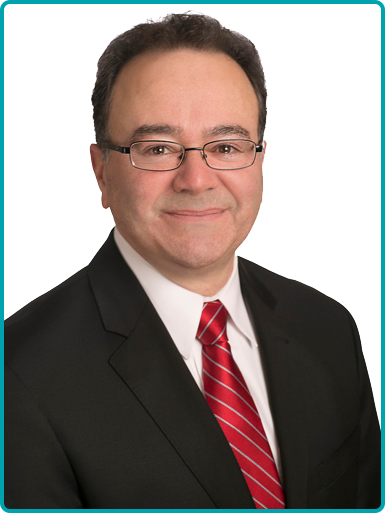
With the increased focus on International Tax, AAFCPAs’ Dave McManus will step in to provide strategic leadership to the firm’s growing tax practice across all industries. Carla McCall will assume the sole responsibility for Managing Partner.
“This acquisition brings even greater depth to AAFCPAs’ strengths as we serve diverse clients globally in nonprofit and commercial sectors – and just as important, the individuals we are welcoming are an outstanding cultural fit,” said Carla McCall. “Our drive to innovate and grow will continue to flourish with the addition of the Goffstein team.”
About AAFCPAs
AAFCPAs is the premier CPA and consulting firm based in New England and considered an attractive alternative to national CPA firms by discerning clients who appreciate exceptional value. We provide audit, tax, accounting, and advisory solutions to nonprofit organizations, commercial companies, and wealthy individuals/estates. Since 1973, our sincere approach to business and service excellence has built a thriving 240+ member firm driven by an altruistic mission to improve the economic well-being and quality of life for all our constituents. AAFCPAs donates 10% of its net profits annually to nonprofit organizations.
AAFCPAs is an independent member of PrimeGlobal, the fourth largest CPA firm association in the world with 300+ member firms in 80+ countries. This provides our clients with seamless national and global coverage, along with an advantageous pay-as-you-use model.