


Data and IT Security goes well beyond cyberspace. The security of your physical office space may also be at risk. A successful physical breach by an outsider could produce unauthorized access to packages, equipment, documents, as well as threats of theft and employee safety.
AAFCPAs has outlined for your considerations some best practice recommendations to help secure your organization’s physical location(s).
Piggybacking
Piggybacking, or the close following of an employee through company entrances, is a risk to physical office spaces during business hours. Employees often allow visitors to roam the space without supervision, assuming that they are a new employee or there for another approved purpose, such as building maintenance.
Once intruders gain discrete access to your office, they could steal equipment or install devices on your network, which would then allow them to access your systems remotely after the fact.
RFID Badge Cloning
Employees should always keep their badges with them, and should shield them when in small spaces, such as elevators. Shielding will make it more difficult for intruders to clone badges. RFID badge cloning can be achieved from anywhere between a few inches and several feet away. Badges may be shielded using RFID blocking wallets or aluminum foil, but these will only shield some badges. For more comprehensive protection, AAFCPAs recommends the use of radio frequency shielding bags, which block cell signals, Wi-Fi, satellite, and Bluetooth frequencies.
Parking Lots
AAFCPAs advises clients to evaluate risks posed by view obstructions, such as overgrown shrubs or poor exterior lighting.
Building Entrances
Clients are urged to ensure that all doors and windows have working locks that are always secured outside of business hours—and during business hours if they provide access to restricted areas. This includes securing windows above the ground floor, which may be breached by someone with a ladder, a tree, or other means of elevation.
AAFCPAs advises clients to assess which areas are secure. For example, the doors to the reception area or conference rooms may not require badge access or other security measures. These areas are not secured from intruders.
What Are Countermeasures/Prevention Techniques?
In order to lessen the odds of a physical breach for your network and increase the environmental security for your employees, AAFCPAs recommends the following internal and external countermeasures.
Physical Security Assessment
AAFCPAs’ IT & cyber security team can assess the physical security of your organization based on common, potential external and internal vulnerabilities. Once the assessment is complete, the team will provide photos and other documentation with clear suggestions for improvement on the inside and outside of the building. Physical breach attempts are part of the physical security assessment. These attempts will be made by incognito members of AAFCPAs’ security team.
In addition to assessing vulnerable points of entry, the attempted breach will put your organization’s existing security measures and employee awareness to the test. Strategies used to gain physical access may include: piggybacking or shuffling in discretely behind an authorized employee; cloning employee badges; and breaching secondary (e.g. service) entrances without being observed.
If a physical breach is successful, our security experts will then further evaluate the availability of sensitive data and the trust levels of employees. This may include searching for: unattended and unlocked computers; monitors in public areas with sensitive information displayed; physical network jacks left unprotected; and/or documents left in a printer, on/in desks, or in unsecured employee mailboxes.
Employee Education and Vigilance
Regardless of the many safety measures in place, employees may still allow for cracks in your physical security shield. AAFCPAs recommends clients conduct annual employee education programs to ensure your team remains vigilant. Some best practices include:
- Clean Desk Policy – Employees should remain vigilant about what is accessible/visible on their desk, such as client information, account passwords, or other sensitive data.
- Locked Workstations – Employees should be expected and reminded to lock their computers/workstations when they leave their desks.
- See something, say something – Employee should be encouraged to greet all unfamiliar faces and offer assistance, as well as ask why they are there. This gives employees an opportunity to introduce themselves to a colleague they may not have met. As an additional precaution, AAFCPAs suggests that management implement photo IDs for employees and badges for all visitors.
Your best line of defense in protecting your organization from physical intrusions is regular security assessments and continued employee education. AAFCPAs advises clients to remain vigilant, assess your security risks regularly, and conduct annual physical security assessments.
To schedule a cybersecurity assessment, or for specific advice on how to best protect your organization against the exploitation of physical vulnerabilities, please contact James Jumes at 774.512.4062, jjumes@aafcpa.com; Mr. Anderson at manderson@aafcpa.com; or your AAFCPAs Partner.
AAFCPAs would like to make clients aware that the Internal Revenue Service (IRS) announced tax year 2020 annual inflation adjustments for more than 60 tax provisions, including the tax rate schedules and other tax changes. Revenue Procedure 2019-44 provides details about these annual adjustments.
The tax year 2020 adjustments generally are used on tax returns filed in 2021.
AAFCPAs has outlined for your convenience some of the tax items for tax year 2020 of greatest interest:
- The standard deduction for married filing jointly rises to $24,800 for tax year 2020, up $400 from the prior year. For single taxpayers and married individuals filing separately, the standard deduction rises to $12,400 for 2020, up $200, and for heads of households, the standard deduction will be $18,650 for tax year 2020, up $300.
- The personal exemption for tax year 2020 remains at 0, as it was for 2019; this elimination of the personal exemption was a provision in the Tax Cuts and Jobs Act.
- Marginal Rates: For tax year 2020, the top tax rate remains 37% for individual single taxpayers for taxable income in excess of $518,400 ($622,050 for married couples filing jointly). The other marginal rates are:
- 35% for incomes over $207,350 ($414,700 for married couples filing jointly);
- 32% for incomes over $163,300 ($326,600 for married couples filing jointly);
- 24% for incomes over $85,525 ($171,050 for married couples filing jointly);
- 22% for incomes over $40,125 ($80,250 for married couples filing jointly);
- 12% for incomes over $9,875 ($19,750 for married couples filing jointly).
- The lowest rate is 10% for incomes of single individuals with incomes of $9,875 or less ($19,750 for married couples filing jointly).
- For 2020, as in 2019 and 2018, there is no limitation on itemized deductions, as that limitation was eliminated by the Tax Cuts and Jobs Act.
- The Alternative Minimum Tax exemption amount for tax year 2020 is $72,900 and begins to phase out at $518,400 ($113,400 for married couples filing jointly for whom the exemption begins to phase out at $1,036,800).The 2019 exemption amount was $71,700 and began to phase out at $510,300 ($111,700, for married couples filing jointly for whom the exemption began to phase out at $1,020,600).
- The tax year 2020 maximum Earned Income Credit amount is $6,660 for qualifying taxpayers who have three or more qualifying children, up from a total of $6,557 for tax year 2019. The revenue procedure contains a table providing maximum credit amounts for other categories, income thresholds and phase-outs.
- For tax year 2020, the monthly limitation for the qualified transportation fringe benefit is $270, as is the monthly limitation for qualified parking, up from $265 for tax year 2019.
- For the taxable years beginning in 2020, the dollar limitation for employee salary reductions for contributions to health flexible spending arrangements is $2,750, up $50 from the limit for 2019.
- For tax year 2020, participants who have self-only coverage in a Medical Savings Account, the plan must have an annual deductible that is not less than $2,350, the same as for tax year 2019; but not more than $3,550, an increase of $50 from tax year 2019. For self-only coverage, the maximum out-of-pocket expense amount is $4,750, up $100 from 2019. For tax year 2020, participants with family coverage, the floor for the annual deductible is $4,750, up from $4,650 in 2019; however, the deductible cannot be more than $7,100, up $100 from the limit for tax year 2019. For family coverage, the out-of-pocket expense limit is $8,650 for tax year 2020, an increase of $100 from tax year 2019.
- For tax year 2020, the adjusted gross income amount used by joint filers to determine the reduction in the Lifetime Learning Credit is $118,000, up from $116,000 for tax year 2019.
- For tax year 2020, the foreign earned income exclusion is $107,600 up from $105,900 for tax year 2019.
- Estates of decedents who die during 2020 have a basic exclusion amount of $11,580,000, up from a total of $11,400,000 for estates of decedents who died in 2019.
- The annual exclusion for gifts is $15,000 for calendar year 2020, as it was for calendar year 2019.
- The maximum credit allowed for adoptions for tax year 2020 is the amount of qualified adoption expenses up to $14,300, up from $14,080 for 2019.
The tax law change covered in the revenue procedure was added by the Taxpayer First Act of 2019, which increased the failure to file penalty to $330 for returns due after the end of 2019. The new penalty will be adjusted for inflation beginning with tax year 2021.
We encourage you to work with your AAFCPAs Tax Advisors who understand the complexities of the TCJA and are well-versed in the full range of actions you can take to save tax.
If you have any questions, please contact: Richard Weiner, CPA, MST at 774.512.4078, rweiner@aafcpa.com; or your AAFCPAs Partner. We welcome the opportunity to provide strategic tax advice for you.
In light of recent increases in limits for federal estate tax exemptions under the Tax Cuts and Job Acts (TCJA), AAFCPAs advises clients to consider the suitability of an Upstream Trust as a strategy for taxpayers who have highly appreciated assets to save money on capital gains tax.
Upstream Trusts are a new option that AAFCPAs utilizes since the passing of TCJA, which involves taking advantage of the largely unused estate tax exemption of older relatives and the step-up in basis under IRC § 1014.
In order to understand the benefit of Upstream Trusts, let’s start by reviewing some basic income tax rules.
Capital Gains Tax – If I buy a share of Apple stock for $100, my basis in the stock is $100. If the Apple stock goes up in value to $300 a share and I hold it for over a year and then sell, I pay long-term capital gains tax on the difference between my basis ($100) and the sales price ($300). In this example, I have capital gain of $200, for which I pay approximately $40 in taxes.
Step-Up in Basis – Let’s assume I did not sell the Apple stock but died owning it at a market value of $300 at my death. Under current tax rules, my heirs get what is called a “step-up in basis” such that their basis becomes the fair market value at my date of death, or in this example $300. If they then sell it for $300, they owe no tax and the $200 in capital gain is never taxed.
Estate Tax – There is a federal and Massachusetts estate tax due upon your death based on the value of your assets at your date of death. The federal estate tax is a flat 40% rate on everything included in your estate in excess of $11,400,000 in 2019. (The exclusion amount goes up to $11,580,000 in 2020.) The Massachusetts estate tax is a graduated rate of up to 16% on everything in excess of $1,000,000. Many states such as New Hampshire or Florida do not have a state estate tax. And it is fair to say, many people are never going to come close to having an estate worth $11.4 million.
Now let’s pull these three together. If I give that $300 share of Apple to my mother and it is includable in her estate, I get a step-up in basis at her death and the capital gain disappears.
It is never that simple, however. The IRS says that if I give my mother the asset and she dies within one year of my gift and it comes back to me or my spouse, I get no step-up. In addition, I have no guarantee Mom is going to leave those assets to me.
Upstream Trusts – Upstream Trusts provide a solution to these challenges of timing and control. AAFCPAs structures the migration of assets in a way that ensures they stay under your control the entire time while getting the step-up in basis at the death of the elderly relative no matter how long since the gift. If that relative is a New Hampshire or Florida resident, you can migrate upward as much as $11,400,000 in assets that you never lose control of and eliminate any built-in capital gains.
Moving income producing assets to a younger generation family member to take advantage of their lower tax bracket is still a common income tax strategy, especially for small business owners and the new Qualified Business Income Deduction under the TCJA. Upstream Trusts are another multi-generational strategy for families to consider for tax opportunity.
AAFCPAs is well-versed in the complexities of Upstream Trusts. For more information, please contact: Joshua England, JD, LLM at 774.512.4109, jengland@aafcpa.com; or your AAFCPAs Partner.
*AAF Wealth Management is a Registered Investment Adviser. Advisory services are only offered to clients or prospective clients where AAF Wealth Management and its representatives are properly licensed or exempt from licensure. This blog is solely for informational purposes. Past performance is no guarantee of future returns. Investing involves risk and possible loss of principal capital. No advice may be rendered by AAF Wealth Management unless a client service agreement is in place.
AAFCPAs would like to make charter school clients aware that the Massachusetts Department of Family and Medical Leave recently issued a policy clarification related to certain excluded employers of the new Paid Family and Medical Leave (PFML) law.
Municipalities, districts, political subdivisions, and other agencies are excluded from PFML law unless they choose to opt-in.
Charter schools are not considered a part of a municipality and are not excluded from PFML law, except for Horace Mann Charter School. Horace Mann Charter School employees are considered municipality employees for the purposes of collective bargaining and are subject to municipality decision.
AAFCPAs advises clients to contact their benefits broker and evaluate which option—public or private—is best for your school.
If you have any questions, please contact: John Buckley, CPA, CGMA at jbuckley@aafcpa.com, 774.512.4039; or your AAFCPAs Partner.
AAFCPAs would like to make clients aware that the AICPA’s Professional Ethics Executive Committee (PEEC) has issued a new interpretation of AICPA’s independence rule, Hosting Service. The new interpretation, effective July 1, 2019, applies specifically to CPA firm attest clients and prohibits CPA firms from providing Hosting Services to these clients.
As you may know, attest services require independence. Attest services include: audits, reviews, compilations, and other engagements conducted in accordance with AICPA’s attestation standard, such as agreed-upon procedures, SOC 1 and SOC 2 reporting. Under the new rule, when an auditor provides Hosting Services, its independence will be impaired because the auditor is maintaining the attest client’s internal control over its data or records.
What are hosting services?
Hosting services are non-attest services and defined as a member in public practice accepting responsibility for the following:
- Acting as the sole host of a financial or non-financial information system of an attest client.
- Taking custody of or storing an attest client’s data or records whereby, that data or records are available only to the attest client from the member, such that the attest client’s data or records are otherwise incomplete.
- Providing electronic security or back-up services from an attest client’s data or records.
In an audit engagement, the following services are considered hosting services:
- Depreciation, amortization, and supporting tax schedule that are “solely” maintained by the auditor.
- Using CPA firm portal or third-party portal to store auditee’s documents, such as lease agreements or other legal documents.
- Being the auditee’s business continuity or disaster recovery provider.
Examples of activities that are not considered hosting services are:
- Retaining a copy of an attest client’s data or records as documentation to support a service provided by CPAs and firms in public practice.
- Using a portal to exchange data and records with the attest client related to professional services provided by the auditor and to deliver the auditor’s work product to third parties at the attest client’s request. However, to avoid providing hosting services, auditor should terminate the attest client’s access to the data or records in the portal within a reasonable period of time after the conclusion of the engagement.
- Having possession of a depreciation or amortization schedule prepared by the auditor, provided the schedule and calculation are given to the attest client so that the attest client’s books and records are complete.
What does this mean for you?
AAFCPAs reminds clients to review our document retention policy. Attest clients must maintain their own records and note that documents exchanged via our client portal are stored temporarily and should not be your only copy.
AAFCPAs ensures all professional team members are familiar with and adhere to relevant ethical standards and always act in the public interest. We prohibit any transaction, event, circumstance, or action that would impair independence or violate the firm’s relevant ethical requirement policy on an attest engagement. In addition, AAFCPAs has taken the following actions to ensure we are in compliance with the new independence rule related to hosting services:
- If we prepare depreciation, amortization or supporting tax schedules, we give the attest client the underlying information so their records are complete.
- To avoid storing attest client’s data or records, we remove all data and records from AAFCPAs’ portal within 120 days after upload.
If you have any questions, please contact Hui-Ting Grady, CPA, at 774.512.4106, hgrady@aafcpa.com; Matt Hutt, CPA, CGMA, at 774.512.4043, mhutt@aafcpa.com; or your AAFCPAs Partner.
On June 21, 2018, the Financial Accounting Standards Board (FASB) issued a final Accounting Standards Update (ASU) 2018-08, Not-For-Profit Entities (Topic 958): Clarifying the Scope and the Accounting Guidance for Contributions Received and Contributions Made. This ASU clarifies and reduces the current diversity in practice in accounting for grants and contributions, particularly for grants and contracts from governmental entities. We outlined the main provisions of ASU 2018-08 in a blog published last year.>>
AAFCPAs has provided guidance and illustrative examples below to help nonprofits determine:
- How to distinguish between contributions and exchange transactions, and
- Which revenue recognition guidance is to be applied?
Reciprocal vs. Nonreciprocal
The primary determinant of whether a grant or contract is a contribution (nonreciprocal) or an exchange (reciprocal) is if the two parties receive and sacrifice commensurate value. If the resource provider (e.g. a government agency) receives commensurate value in return for the cash or other resources transferred, the transaction will be accounted for as an exchange transaction and both parties will follow guidance in ASC Topic 606 or other applicable guidance. If commensurate value is not received, the transaction will be accounted for as a contribution and the guidance in ASC Subtopic 958-605 will be applied.
The key for the evaluation is to focus on the terms of an agreement or contract, not type of resource provider. In addition, the term used in the presentation of financial statements to label revenue (i.e. contracts, grants, contribution, or donations) is not a factor for determining whether an agreement is within the scope of ASC Topic 606 or ASC Subtopic 958-605. Under the new guidance in ASU 2018-08, a resource provider is not synonymous with the general public, even a governmental entity. When a value received by the resource provider is incidental to the potential public benefit, the transaction is not considered commensurate value received in return. The resource provider must receive direct and primary benefit for the resources transferred to be considered a reciprocal transaction. The new guidance further clarifies that execution of the resource provider’s mission or the positive sentiment from acting as a donor shall not constitute commensurate value received by the resource provider. As a result, we expect most government contracts and grants will be accounted for as contributions—unless the governmental entity receives the direct commensurate value in return for the cash or other resources transferred.
Transactions Involving Third Parties
Transactions involving a specified third party may present a challenge for nonprofits in determining if the transaction is reciprocal or nonreciprocal. Nonprofits must use judgment to make the determination based on review of the substance of the contract or grant agreements. In general, if a contract or grant is made by a donor on behalf of an identified customer for an existing exchange transaction, the contract or grant is simply a third-party payment to the exchange transaction. If a contract or grant is made by a donor for a group of beneficiaries with eligibility criteria, the grant is a contribution since there are no identified customer(s) at the time the grant is awarded. AAFCPAs has provided examples below to assist clients in evaluating transactions where there are specified third parties involved.
Examples of third-party payments for exchange transactions:
- Healthcare Entity A provides medical services to Patient X and receives a payment from a governmental entity on behalf of the patient. The governmental entity is a third-party payer since the payment is made to Healthcare Entity A on behalf of Patient X (an identified customer) to an existing exchange transaction between Healthcare Entity A and Patient X.
- Student Y is enrolled at College B and the total tuition charged for the semester is $25,000. Student Y has received a $5,000 grant to use toward the tuition fee, which is paid directly by the grantor to College B. The grant received by College B is awarded to Student Y to be used for the existing exchange transaction between College B and Student Y. It’s not a contribution from the grantor to College B.
- Affordable Housing NFP receives rent subsidies associated with individual residents from a housing authority agency. The housing authority agency is a third-party payer for the rental transactions between Affordable Housing NFP and specified residents since the rent subsidies are awarded directly to the residents, not Affordable Housing NFP.
Examples of contributions:
- Social Service Agency C provides drug rehabilitation services to eligible individuals. Individuals sign up and go through Agency C’s intake process to receive the service but payment for the service is made under a government contract. Agency C determines who qualifies for the program. The payment is accounted for as a contribution, that is restricted for eligible individuals, as commensurate value is not exchanged between Agency C and any identified customers.
- College B receives a grant from the City of Boston that is to be used for scholarship for students who are residents of the City of Boston. College B determines the specific students to award scholarships. Student Y qualifies for the scholarship and receives $3,000 towards tuition. The grant was awarded to College B, not any identified students (i.e. Student Y) and therefore, the transaction is a contribution.
- Affordable Housing NFP receives an operating support grant for housing individuals that meet income criteria. The operating support grant is considered a contribution since it is not applied directly as payment to rents owed by residents.
Understanding and implementing accounting standards can be complex, time-consuming, and often require requisite skills and expertise not found on your internal finance team. AAFCPAs provides financial management assistance on these complex technical accounting issues, allowing clients to confidently apply the standard with greater efficiency and ease.
If you have any questions please contact: Hui-Ting Grady, CPA at 774.512.4106, hgrady@aafcpa.com; Matt Hutt, CPA, CGMA at 774.512.4043, mhutt@aafcpa.com; or your AAFCPAs Partner.
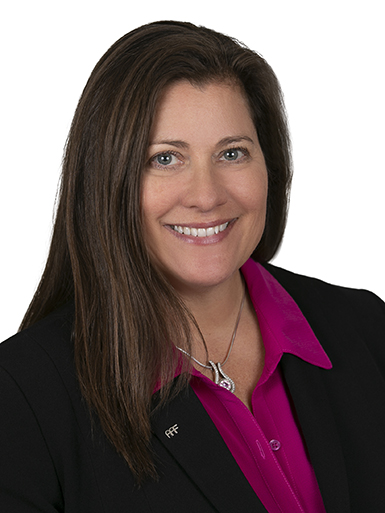 AAFCPAs’ Co-Managing Partner Carla McCall, CPA, CGMA presented a best practices session titled: Putting Innovation to Work: Moving from Ideas to Action at Upstream Academy’s Best Practices 2019 annual conference for CPA firm leadership teams.
The desire to improve is one of the hallmarks of a high-performance firm. It is difficult to move from desire to action, and from great ideas to great execution. In her presentation, Carla shared how AAFCPAs puts innovation to work by taking great ideas and putting them into action with concrete, strategic plans.
In 2018, Carla launched AAFCPAs’ Innovation Lab and a successful Changemaker Challenge to encourage and empower young professionals to think more intrapreneurial, spawning ideas for technology, process improvements, efficiency, and new services.
“It takes some people by surprise when I talk about a culture of innovation in accounting – CPAs may not be top of mind when you think of change agents,” writes Carla.
Read four lessons learned in creating a culture of innovation. >>
Carla is Co-Managing Partner of AAFCPAs, a 225+ person CPA and consulting firm with offices in Boston, Westborough, and Wellesley, MA. Her dynamic executive leadership, bold practicality, and enthusiasm to embrace change is setting the standard for mission driven, growth organizations.
If you have questions, please contact: Carla McCall, CPA, CGMA at 774.512.4049, cmccall@aafcpa.com.
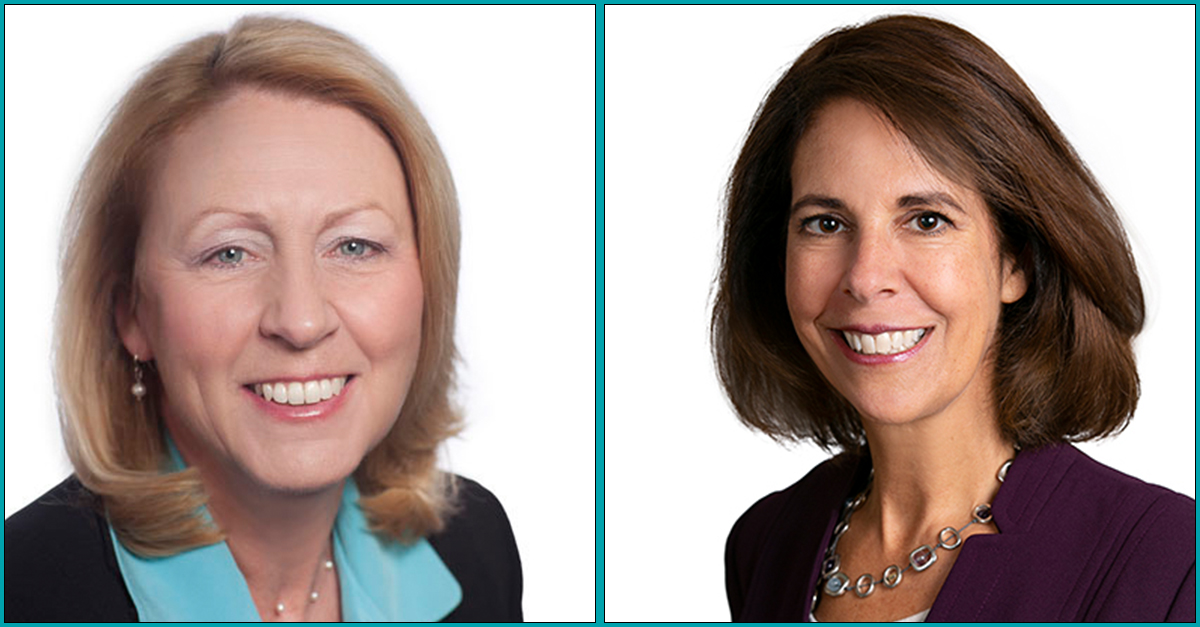 AAFCPAs is pleased to announce Donna M. Richer is promoted to Chief Talent Officer (CTO) and Ingrid Goldbloom Bloch joins the firm as Director, Talent Advancement.
Donna M. Angelico
As CTO, Donna leads AAFCPAs’ Talent Management function and helps maintain our unique and authentic company culture—one that genuinely cares for the individual, expects honesty and high moral character, and sustains employee enthusiasm with positive energy. Additionally, she oversees the firm’s training efforts with curriculum to support skills needed for the future of our workforce, including tracks for data analytics, process automation, and artificial intelligence.
Ingrid Goldbloom Bloch
Ingrid joins AAFCPAs with over 20 years of experience in career and executive coaching, program development and implementation, skills and leadership training. Ingrid leads AAFCPAs’ efforts to enhance the firm’s unique mentoring/group coaching program so team members may be happy, productive, and the drivers of their careers.
“I will help our people align their skills with their values, personality, and interests so they may bring their best selves to work and genuinely enjoy what they do every day,”
said Ingrid.
As an experienced trainer and educator, Ingrid will also contribute to the development of our leadership programs. She is an active public speaker and presenter. She holds a MA in Counseling Psychology from Lesley University and a BS in Communication Arts and Psychology from the University of Wisconsin.
Do You Seek Meaningful Work?
AAFCPAs is making a difference for the clients we serve and the communities where we live and work. We hire the very best people in all roles and at all levels. Do you see yourself here? Learn more. >>
“Our people are a true differentiator of our brand. We continue to invest in our Talent because happy CPAs and advisors make happy clients,” said David McManus, CPA, CGMA, AAFCPAs Co-Managing Partner.
Held every October, National Cybersecurity Awareness Month (NCSAM) is a collaborative effort between government and industry to raise awareness about the importance of cybersecurity and to ensure that all Americans have the resources they need to be safer and more secure online.
The Business & IT Security practice at AAFCPAs has published the following insights recently to outline the most common vulnerabilities and how to mitigate risks:
- IT Security Vulnerabilities Caused by Web Applications – Sure “there’s an App for that,” but is it secure?
- The Internet of Things (IoT) and Cyber Security – How does your HVAC system, smart fridge, or printer make you vulnerable?
- Configuration & Application Vulnerabilities in Cyber & IT Security – The most common vulnerabilities are poor configurations and outdated/unpatched systems or applications.
- Eye on Cyber: A Day in the Life of an Ethical Hacker – Learn about the covert tricks and techniques used by AAFCPAs’ Certified Ethical Hacker.
- Common Social Engineering Cyber Attacks and Prevention Strategies – The human component of cybersecurity is the weakest link.
- AAFCPAs’ Mr. Anderson Earns Certified Ethical Hacker Credential – Meet AAFCPAs’ “white hat” ethical security hacker and business continuity advisory.
- AAFCPAs Earns SOC for Cybersecurity Services Certificate – Report on your cybersecurity management programs to internal and external stakeholders with credibility.
AAFCPAs reminds clients that the best line of defense in protecting your organization from risks is to remain vigilant and understand your vulnerabilities. AAFCPAs’ Cyber Security & Technology Assessments help identify risks from the use of technology that could potentially cause information loss or financial or reputational harm to your organization.
To schedule a cyber-security assessment, or for specific advice on how to best protect your organization against cyber-attacks, please contact James Jumes at 774.512.4062, jjumes@aafcpa.com; or your AAFCPAs Partner.