


Boston Business Journal | “Organizations are tax-exempt for a reason: to optimize their abilities to benefit society,” says Carla McCall, CPA, CGMA, AAFCPAs’ Co-Managing Partner. In this op-ed, Carla urges nonprofits to participate in the survey to show Congress how detrimental the original provision in the TCJA was to their mission.

As you may be aware, the Dow Jones Industrial Average plunged 800 points yesterday, August 14th, marking the worst single day point drop of 2019. The media attributed the plunge to a slowing global economy, a trade war with China, and an inverted yield curve.
The 10-year treasury rate for a time on August 14th dropped below that of the 2-year treasury rate. This inverted yield curve means that if you invested in bonds you would be paid more interest to hold 2-year bonds than 10-year bonds. The idea with bonds is that you should receive a higher rate of interest the longer you lock up your money.
Historically, an inverted yield curve has been an early signal that a recession is around the corner. However, key treasury rates briefly inverted last year on December 3. At that time the 3-year treasury rate and 5-year treasury rate briefly inverted. Even with this brief inversion last year the Dow is still up 9.14% year-to-date through August 14th.
AAFCPAs Wealth Management has not changed our approach and belief that a long-term asset allocation strategy based on a well-thought-out plan is the best course of action. We urge our investors to stay the course, and not be overly influenced by the barrage of negative news. The fundamentals of the US economy are still relatively strong. Recession or not, volatility is a part of investing and the best way of addressing this is to build a plan that accounts for this uncertainty.
If you have any questions about your personal financial plan, please contact: Carmen Grinkis, PhD, CLTC, CFP® at 774.512.4061, cgrinkis@wealth.aafcpa.com; Andrew E. Hammond, CFP® at 774.512.4143, ahammond@wealth.aafcpa.com; or your AAFCPAs Wealth Advisor.
*AAF Wealth Management is a Registered Investment Adviser. Advisory services are only offered to clients or prospective clients where AAF Wealth Management and its representatives are properly licensed or exempt from licensure. This blog is solely for informational purposes. Past performance is no guarantee of future returns. Investing involves risk and possible loss of principal capital. No advice may be rendered by AAF Wealth Management unless a client service agreement is in place.
AAFCPAs would like to make clients aware that the IRS is automatically waiving the estimated tax penalty for eligible taxpayers who already filed their 2018 federal income tax returns but did not claim the waiver. Again, this is an automatic waiver, so there is no need to contact the IRS to apply for or request the waiver.
Earlier this year, the IRS lowered the penalty assessment threshold from its usual 90% to 80% to help taxpayers whose withholding and estimated tax payments did not fully cover their 2018 tax liability. The agency also eliminated the requirement that estimated tax payments be made in four equal installments, as long as they were all made by the final estimate due date of January 15, 2019.
Who is Eligible?
The automatic waiver applies to any individual taxpayer who paid at least 80% of their total federal tax liability through a combination of withholding or quarterly estimated tax payments but did not claim the special waiver available to them when they filed their 2018 return earlier this year.
The IRS will be mailing copies of Notice “CP21”—notices used by the IRS to notify you of changes to your return—granting this relief to affected taxpayers. Any eligible taxpayer who already paid the penalty will also receive a refund check about three weeks after their CP21 notice regardless if they requested penalty relief.
What Does AAFCPAs Advise?
Should you receive a CP21 notice, please send it to your AAFCPAs Tax Partner upon receipt, and prior to cashing any refund check from the IRS. We will review changes to your return to ensure your expected refund is accurate.
For clients whose returns are due by the Oct 15 extension deadline, the Tax Practice of AAFCPAs will make the appropriate waiver disclosure in the returns.
AAFCPAs reminds clients to review their withholdings for 2019. This is especially important for anyone who faced an unexpected tax bill or a penalty when they filed this year. It’s also an important step for those who made withholding adjustments in 2018 or had a major life change. Those most at risk of having too little tax withheld include those who itemized in the past but now take the increased standard deduction, as well as households with two wage earners, employees with nonwage sources of income and those with complex tax situations.
If you have any questions, please contact: Richard Weiner, CPA, MST at 774.512.4078, rweiner@aafcpa.com; or your AAFCPAs Partner. We welcome the opportunity to provide strategic tax advice for you.
What Is IoT And How Do Hackers Infiltrate Your Devices?
An increasing number of companies are installing Internet of Things (IoT) devices on their networks. IoT devices are typically “black box” devices, the inner workings of which are unknown to most users. For example, HVAC systems, smart fridges, computer printers, and even cars can contain IoT-enabled technology that connects through WiFi or cellular and therefore can be considered IoT devices.
With PCs, there are many different types and manufacturers, but most of them run via Windows, MacOS or Linux. In contrast, there are about as many unique operating systems for IoT devices as there are manufacturers.
It is currently estimated that approximately two million IoT devices are vulnerable to complete takeover, according to Threatpost. Hackers can discover vulnerabilities of these devices or their manufacturers through documents published on the internet or by monitoring communication to and from your IoT devices.
Which Common Devices Are At Risk?
HVAC Systems
HVAC systems often reside on the company’s internal network and can be capable of remote and internet connections. This device is not secured, which means an outsider may be able to breach the HVAC system. While it is only a heating and cooling mechanism, the innocence of the breach is deceptive. Hackers can use this device to obtain access to other parts of an organization’s network.
For example, in the Target data breach of 2013, it is suspected that hackers stole credentials from the retail chain’s HVAC company in order to access the network. Hackers then used this network access to steal customer credit card data. According to USA Today, this breach affected 41 million customer accounts and forced Target to pay $18.5 million in the settlement.
Multi-Function Copier (MFC) Devices
Multi-function copier (MFC) devices, such as computer printers, are vulnerable. Once a hacker gains access, they can view items that have already been printed and receive unlimited access to future print items.
Some companies have taken extra precautions to protect their print jobs, including providing each employee with an individual PIN number in order to start their print/copy job. While this strategy does help to reduce the number of printed pages left on the printer for an extended period of time, hackers can still use brute force methods to gain access. This brute force approach relies mainly on automated programs that are able to enter a large quantity of combinations at once in order to find the desired PIN.
Hackers can further infiltrate the MFC devices if they possess internet access. Using the device’s internet capabilities, they can send employees’ print jobs to other locations. These locations could include other computer printers, or other virtual file folders.
What Countermeasures Can You Deploy?
AAFCPAs advises clients to understand the connections and data that their IoT devices generate, and to ensure security is regularly assessed and tested.
Vulnerability Scan
IoT devices are black box systems, and companies must identify and understand security risks in order to determine appropriate countermeasures. AAFCPAs conducts vulnerability scans for clients to identify, examine, and classify their IoT devices, connections, configurations, and monitor the types of data transmitted.
The results of the vulnerability assessment are analyzed by AAFCPAs’ cyber security team to advise on necessary steps to protect your organization, secure the IoT devices from potential hacker exploits, and keep your sensitive data safe. AAFCPAs recommends that organizations conduct a vulnerability scan on a quarterly basis and each time a new type of device is added to the network, as this constitutes an infrastructure change.
Network Inventory
IT staff should be aware of all devices on the network in order to understand their capabilities and determine any potential updates for those devices. AAFCPAs can conduct an inventory of all devices currently on your network.
When new devices are introduced to the network, your organization should review applicable IT policies and procedures, such as the written information security policy (WISP). For example, if a new camera is added to your network, your IT staff must confirm if the physical security policy is still applicable. If your organization’s WISP requires antivirus protection to be installed on all devices on your network, but these new cameras are not capable of having endpoint protection installed, then you would need to identify compensating or mitigating controls so the new devices do not create risks for the company.
Remain Vigilant
Your best line of defense in protecting your organization’s IoT devices from hackers is identifying all of the devices that reside on your organization’s network and understanding their vulnerabilities. AAFCPAs advises clients to remain vigilant and scan your network for potential cyber security risks.
To schedule a cyber security assessment, or for specific advice on IoT devices and how to best protect sensitive data, please contact James Jumes at 774.512.4062, jjumes@aafcpa.com, Mr. Anderson at manderson@aafcpa.com, or your AAFCPAs partner.
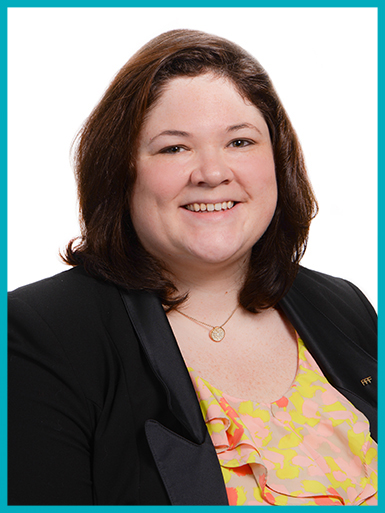 AAFCPAs is excited to announce that Courtney McFarland, CPA, MSA has been appointed and agrees to serve on the Board of Directors of the Baypath Humane Society of Hopkinton.
Courtney will serve as a fiduciary of Baypath, providing strategic direction and financial advice to help the organization achieve its vision for the future.
“As a lifelong resident of Hopkinton, I have seen how Baypath has changed the community, and how the community has grown to support the organization,” said Courtney. “I have adopted multiple cats from Baypath over the years, all of whom have brought great joy to my family.”
Courtney is a leader in AAFCPAs’ Healthcare practice, serving diverse clients ranging from community health centers, behavioral health providers, nursing homes & senior care living centers, skilled nursing facilities, home care & hospice agencies, and physician’s organizations. She is a member of the firm’s Revenue Recognition Task Force, dedicated to helping the firm and clients understand best practices for an efficient and effective implementation of the robust new framework. She is also an active member of AAFCPAs’ Innovation Committee, and a participant in the firm’s inaugural Innovation Lab Changemaker Challenge.
Click here to read Courtney’s full profile. >>
About the Baypath Humane Society of Hopkinton
Baypath Humane Society of Hopkinton is dedicated to providing shelter, care, humane treatment and loving homes for stray or unwanted companion animals. We seek to serve our community by fostering relationships, promoting education and making a positive impact on pet overpopulation.
Next week, August 4-10, 2019, is National Health Center Week, and AAFCPAs invites you to join us again this year in celebrating the great work and significant impact of these consumer-driven and patient-centered organizations!
National Health Center Week gives our Health Center clients a chance to bring light to the health needs in our communities and the shared stake in community health. It allows them to show not only what they do but how their unique model of care is offering solutions to the nation’s health care crisis.
Health Center Week has become a powerful tool to rally public support for Health Center programs. Public support and confidence in Health Center programs translates into legislative victories, positive administrative policies and growing partnership with the public and private sectors so that Health Centers can serve greater needs and lead this nation to a more equitable health delivery system for all people.
Each day of NHCW 2019 is dedicated to a particular focus area:
 Sunday, 8/4: Social Determinants Day (Creating Nutrient-Rich Soil)
- Monday, 8/5: Healthcare for the Homeless Day
- Tuesday, 8/6: Agricultural Worker Health Day
- Wednesday, 8/7: Patient Appreciation Day
- Thursday, 8/8: Stakeholder Appreciation Day
- Friday, 8/9: Health Center Staff Appreciation Day
- Saturday, 8/10: Children’s Health Day
AAFCPAs proudly serves Community Health Centers throughout New England, helping these organizations to navigate the complexities of the constantly evolving healthcare industry. Our Healthcare Practice has been serving FQHCs for over 45 years.
Our witness to their passion serves as daily inspiration!
You may learn more about National Health Center Week by visiting: https://healthcenterweek.org
The Wall Street Journal recently reported that charitable giving had its largest decline since the 2008-2009 financial crisis, citing circumstances such as 2018 tax-law changes and a late-year stock-market dip as the reasons for the decline.
At AAFCPAs Wealth Management, we know that taxes are not the reason you give; however, they may affect how much you give, the timing of your gifts, and the vehicle you use. We have outlined the following strategies for your consideration, so you may confidently continue your charitable endeavors while also optimizing your tax benefit.
Direct Your Required Minimum Distribution to a Charity
When you reach age 70½, you are required to withdraw a certain amount of money from your retirement accounts each year. That amount is called a required minimum distribution (RMD). The RMD is subsequently taxed as ordinary income for federal, state and local tax purposes. This additional taxable income may push you into a higher tax bracket and may also reduce your eligibility for certain tax credits and deductions. If your income exceeds a certain threshold, you may also be subject to increased Medicare premiums.
If you do not need your RMD to fund your expenses, you may consider directing all or part of the distribution annually to your charity(s) of choice through a qualified charitable distribution (QCD). A QCD is a direct transfer of funds from your retirement account custodian, payable to a qualified charity. The QCD amount counts toward your RMD for the year, up to an annual maximum of $100,000. The QCD is not included in your gross income, allowing you to avoid or reduce the impact of RMD income.
Bunch Your Donations
The 2018 Tax Cuts & Jobs Act (TCJA) doubled the standard deduction to $24,000 for married couples and $12,000 for individuals. Additionally, the elimination and reduction of several popular deductions means many taxpayers will not collect the necessary deductions to surpass the new standard deduction threshold.
Bunching charitable donations is a strategy where donors make their planned giving for multiple years in a single year in order to exceed the new thresholds and take advantage of itemizing deductions. In off-years (or “skip-years”), you would take the standard deduction.
Direct Income to a Donor Advised Fund
You may continue to maintain the same cadence of charitable giving by placing the money in a donor advised fund (DAF) or private foundation. A DAF may be an attractive alternative to a private foundation because they have less administrative costs. A DAF is a giving vehicle which allows donors to use a wide range of personal assets to make a charitable contribution such as highly appreciated stock, real estate, art-work, business interests, and more. Once the asset is inside the DAF, the item can be sold without incurring a personal capital gain tax and while also receiving an immediate tax deduction. Note: Each asset type has unique tax considerations so please consult with an AAFCPAs Wealth Advisor to understand the implications of your planned donation. Your assets will continue to grow in value in the DAF, and you may direct grants to charities over time. Additionally, you may name children/ grandchildren as advisors or successor advisors to your DAF, allowing them to continue your charitable legacy.
There are a multitude of tax efficient charitable giving structures to consider, and AAFCPAs Wealth Management is available to discuss your unique situation and determine what is most appropriate for you.
If you have questions, please contact: Carmen Grinkis, PhD, CLTC, CFP® at 774.512.4061, cgrinkis@wealth.aafcpa.com; Joshua England, JD, LLM at 774.512.4109, jengland@wealth.aafcpa.com; or your AAFCPAs Partner.
Many of AAFCPAs’ clients are engaged in philanthropy, nobly sharing the financial resources they are blessed with to support a range of causes. At AAFCPAs, we too have a commitment to volunteerism and giving. We celebrate the many nonprofits that enrich our lives by committing to donate 10% of our net income annually back to nonprofits.
*AAF Wealth Management is a Registered Investment Adviser. Advisory services are only offered to clients or prospective clients where AAF Wealth Management and its representatives are properly licensed or exempt from licensure. This blog is solely for informational purposes. Past performance is no guarantee of future returns. Investing involves risk and possible loss of principal capital. No advice may be rendered by AAF Wealth Management unless a client service agreement is in place.
On June 11, 2019 the Massachusetts Joint Committee on Revenue heard House Bill 2510, An Act rescinding the effect of IRC 280E on businesses legally selling marijuana. While this bill has not been placed into effect yet, the hearing is a step forward towards state wide repeal of IRC 280E.
What Does House Bill 2510 Do?
Simply put, this proposed bill eliminates IRC Code 280E at the state level and allows cannabis businesses to take the same ordinary and necessary business deductions as all other businesses. Section 1 of the bill allows a deduction from Massachusetts part b adjusted gross income, an amount paid or incurred during the taxable year in carrying on either a recreational or medical marijuana business that would have been deductible had IRC 280E not been in effect.
Additionally, line 33 of the bill restates that a deduction for any amount paid or incurred for carrying out recreational and medical marijuana businesses is allowed against Massachusetts net income, which was not previously deductible due to the presence of IRC 280E in the Federal Tax Code. The proposed effective date of this bill is for tax years beginning on or after January 1, 2019.
While recreational and medical marijuana businesses are legal in Massachusetts under M.G.L. chs. 94G and 94I, the state’s corporate tax code remains tied to the Federal Tax Code, absent specific provisions decoupling it. This proposed bill would allow Massachusetts cannabis businesses to take ordinary and necessary business deductions, at the state level, without the obstacle of IRC 280E.
While the federal repeal of IRC 280E does not seem on the horizon, there is a very real possibility that this bill gets passed in Massachusetts, as recreational and medical marijuana are legal to sell and possess statewide.
AAFCPAs has a proven track record of effectively advising the Massachusetts cannabis industry on: tax planning and compliance; outsourced accounting; entity structure; financing structures; audit and assurance; business plans; financial projections; cost allocations; and more. Our proven cannabis expertise makes us uniquely qualified to assist cannabis businesses in navigating through the complexities of the industry.
The Cannabis Practice of AAFCPAs will continue to monitor the legislative process and keep you informed as significant changes occur. If you have any questions please contact: Christopher Consoletti, Esq. at 774.512.4180, cconsoletti@aafcpa.com; David McManus, CPA, CGMA at 774.512.4014, dmcmanus@aafcpa.com; or your AAFCPAs Partner.
The Operational Services Division (OSD) of the Executive Office for Administration and Finance just released its FY 2019 UFR Audit and Preparation Manual, FY 2019 UFR Auditor’s Compliance Supplement, and FY 2019 Excel UFR Templates. The FY 2019 Manual is effective July 1, 2018 for the UFRs to be filed for FY 2019. Visit Mass.gov UFR Resources Center to access all information related to the UFR filing.
In the Notice of Policy Changes to FY 2019 UFR Audit and Preparation Manual, OSD outlines various items in the UFR Manual that have changed since the last version. AAFCPAs has outlined the significant changes for your convenience:
- Compensation disclosure in UFR Schedule A – The filing entity is required to disclose its principals’ compensation from the filing entity, its parent organization, related parties and affiliates. The compensation now consists of salaries, fees and bonuses, severance, and all other items included as personal income. This includes benefit packages, all forms of deferred compensation, and all payments by your organization to employee benefits plans and retirement plans. This also includes health insurance, vehicles, consultant payments, loans, and other items identified as employee compensation in IRS Publication 525 Taxable and Nontaxable Income of the Internal Revenue Service.
- Certain expense account line items reported in Supplemental Schedules A & B are now consolidated:
- Line 18E Direct Care Program Consultant and Line 19E Temporary Help are consolidated and the total will be reported in Line 18E.
- Program vehicle insurance (formerly included in Line 25E Client Transportation) now must be reported in UFR Line 26E Vehicle Expenses.
- Non-charitable expenses (formerly included in Line 34E Non Chartable Expenses) are defined as expenses related to activities that are not consistent with the charitable purpose as stated in the not-for-profit organization’s articles of organization, and should be shown as non-reimbursable costs in accordance with 808 CMR 1.05 and reported in Line 54E Direct State/Federal Non-Reimbursable Expense or Line 55E Allocation of State/Federal Non-Reimbursable Expense.
- Line 37E Management Fees and Line 41E Management Consultant are consolidated and the total will be reported in Line 37E.
- Line 39E Legal Fees and Line 42E Other Professional Fees and Other Administrative Expenses are consolidated and the total will be reported in Line 42E.
- Line 47E Director & Officers Insurance and Line 49E Professional Insurance are consolidated and the total will be reported in Line 47E.
- Certain staffing account line items reported in Supplemental Schedules B are now consolidated:
- Line 1S Program Director, Line 2S Program Function Manager, Line 3S Assistant Program Director and Line 4S Supervising Professional are consolidated and the total will be reported in Line 2S.
- Line 36S Maintenance, Housekeeping/Groundskeeping, Cook and Line 37S Direct Care/Driver Staff are consolidated and the total will be reported in Line 36S.
- Certain non-reimbursable expense account line items reported in Supplemental Schedules A & B are now consolidated:
- Line 3N Direct Other Program/Operating Expense and Line 6N Direct Other Expense are consolidated and the total will be reported in Line 3N.
- Other changes:
- A separate detail schedule for Line 35E Other Expense is only required if the total amount is over $5,000.
- The salary cap for officers and managers as defined by OSD is increased from $178,036.35 in FY 2018 to $183,448.93 in FY 2019.
- A separate schedule for Lines 26E and 45E Vehicle Expenses and Administrative Vehicle Expenses detailing the passenger vehicles is not required for 7 persons and greater passenger vans and vehicles. Previously it was not required for 8 persons and greater passenger vans and vehicles.
In addition to the above changes, OSD has updated its UFR Excel Templates to reflect the net asset classes changes made by ASU 2016-14. There are only two net asset classes: Without Donor Restrictions and With Donor Restrictions.
We advise you to review these changes and determine whether any changes need to be made to your financial reporting systems in order to gather the information necessary to prepare an accurate UFR based upon these new rules.
If you have any questions, please contact Hui-Ting Grady, CPA, at 774.512.4106, hgrady@aafcpa.com; Matt Hutt, CPA, CGMA, at 774.512.4043, mhutt@aafcpa.com; or your AAFCPAs Partner.